Gas-Actuated Bonding Revealed by In Situ Electron Microscopy
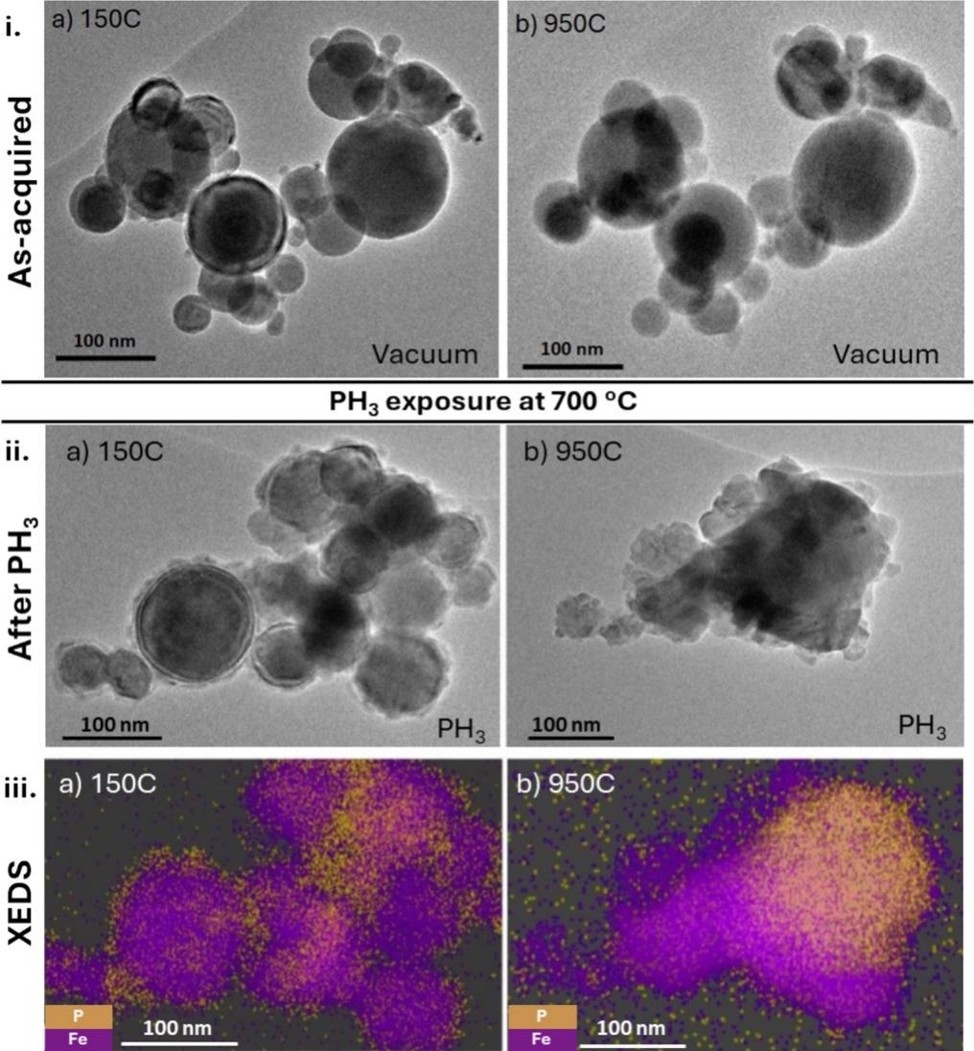
Researchers from Lund University are developing Gas Actuated Bonding, a novel metal joining technique that uses gaseous melting-point-depressant agents to create metallurgical bonds at temperatures below the bulk melting point of the metal. Using phosphine (PH₃) and 316L stainless steel as a model system, the team demonstrated joining without fillers, fluxes, or localized heating.
A key part of the study was the use of in situ transmission electron microscopy (TEM), which enabled direct observation of the bonding process between steel nanoparticles. By following microstructural changes in real time, the researchers could investigate how exposure to the melting-point-depressant gas created a highly mobile interfacial layer that promoted bonding between metal surfaces. These observations provided crucial experimental evidence for the mechanism behind Gas Actuated Bonding and helped explain how joints can form at relatively low temperatures.
Complementary microstructural and compositional analyses of a joined component confirmed phosphorus incorporation and diffusion at the bonding interface, supporting the mechanism observed during the in situ TEM experiments. The combination of advanced electron microscopy and materials characterization was essential for understanding and validating this new joining concept.
Gas Actuated Bonding offers a promising alternative to conventional welding and brazing, particularly for small, delicate, geometrically complex, or dissimilar metal components where traditional joining methods can be difficult to apply. The work highlights how advanced electron microscopy can provide unique insights into the fundamental processes that underpin emerging manufacturing technologies.
Reference: Z. I. Yondu, S. Lehmann, M. Ek and F. Lenrick, Gas actuated bonding: a novel metal joining method with melting point depressant gases, Materials & Design, 2026.
https://doi.org/10.1016/j.matdes.2026.115875